 Riverland
Coffee
Used coffee grounds
Ground coffee from home or a café, separated from packaging. Plain paper coffee filters can be discussed. Please leave out pods, capsules, cups and plastic filters.
Support our family business
Want to get in touch about supporting our business with green waste donations? We’d love to hear what you have. Call Randell to check the material, quantity and a suitable drop-off time.
Local materials. A useful next chapter.
Suitable local organic materials support our composting and worm-feed program. Keeping the right materials together helps us manage our feed and continue making worm juice and screened castings here in Berri.
Please arrange every donation before travelling. We’re a small family business with limited space. What we can receive depends on the material and our capacity at the time. Please don’t leave material at the property without agreement.
A thank you to our local community
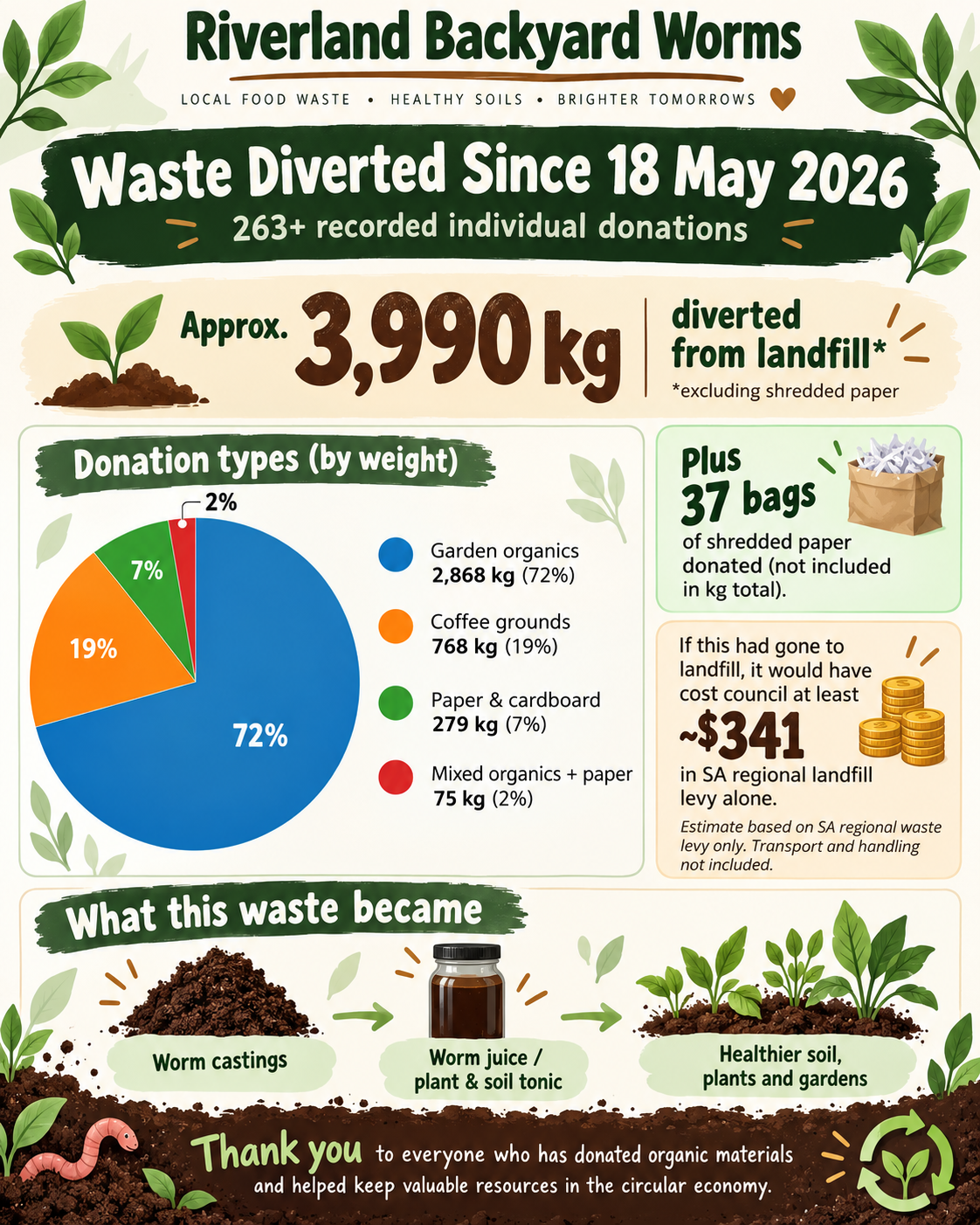
Our October 2026 Facebook infographic brought together donation records beginning on 18 May 2026. Here’s the breakdown from that snapshot.
| Material | Weight | Share |
|---|---|---|
| Garden organics | 2,868 kg | 72% |
| Coffee grounds | 768 kg | 19% |
| Paper & cardboard | 279 kg | 7% |
| Mixed organics + paper | 75 kg | 2% |
| Total recorded weight | 3,990 kg | 100% |
Weights are approximate and shares are rounded. The 37 bags of shredded paper are recorded separately and excluded from the kilogram total and pie chart.
A historical snapshot, not a live total. These figures reproduce our earlier donation summary. They are reported donation estimates, rather than an independently audited landfill-diversion measurement.
The original also contains a historical landfill-levy illustration. That estimate is not a verified saving to council.
Clean, separated & agreed in advance
These are useful materials to ask us about. Tell us the source and approximate quantity so we can confirm what fits our current mix.
Coffee
Ground coffee from home or a café, separated from packaging. Plain paper coffee filters can be discussed. Please leave out pods, capsules, cups and plastic filters.
Garden greens & browns
Clean dry leaves, untreated grass clippings and small soft garden trimmings. Keep out rubbish, soil, stones, seeding weeds and diseased plants. Tell us about any spray treatments.
Paper & cardboard
Shredded plain paper and plain cardboard, with tape, plastic and staples removed. Please leave out glossy, laminated, waxed or plastic-lined packaging.
From local material to worm feed
We prepare suitable material through our composting process, then introduce prepared, cooled feed to the worm beds. Worms and microbes continue processing it before we harvest and screen the castings.
Tell us what you have, how much, where it comes from and whether it has been sprayed or treated. Keep agreed materials separate from packaging and bring them in manageable containers at the arranged time.
See our composting process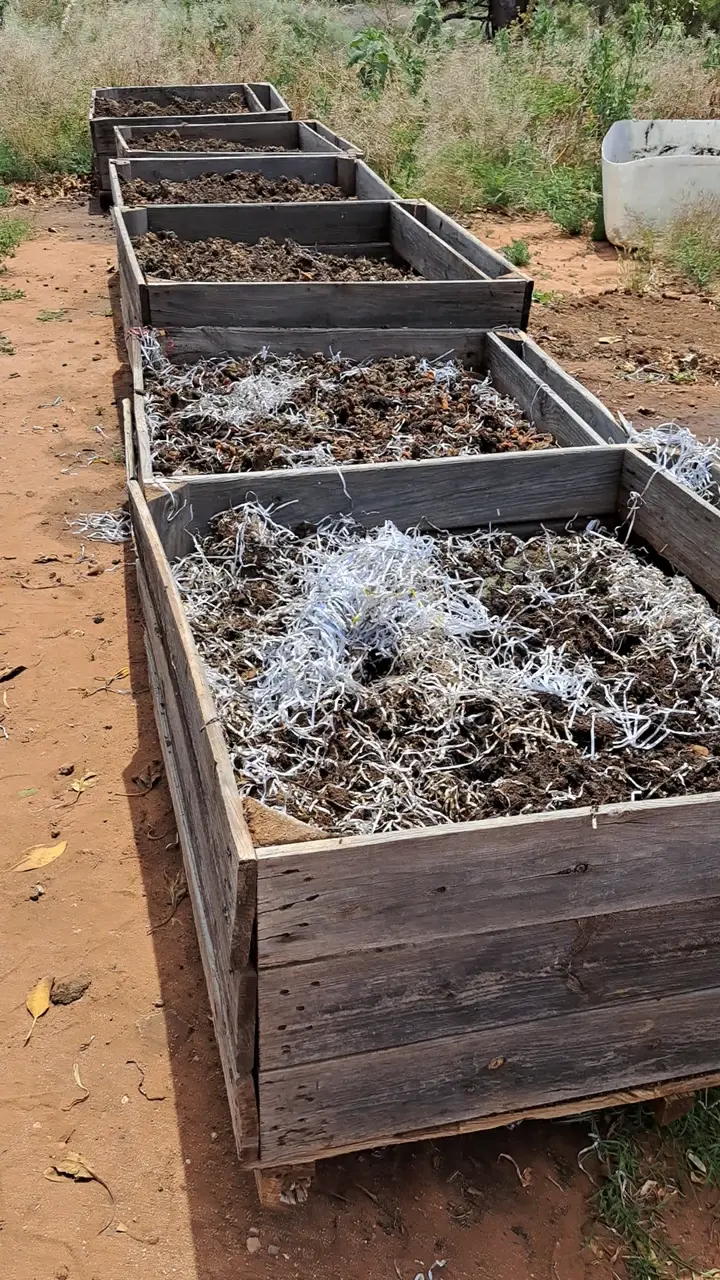
Call 0400 288 535 or email ordersriverland@gmail.com with the material, source and approximate quantity. We’ll let you know whether we can receive it and arrange the next step.
Riverland landscapes, crops and composting worms provide visual context. Reference photographs do not depict RBW customer trials; some crop and worm photographs were taken outside the region. Our farm photographs are supplied by Riverland Backyard Worms.
Photographs are resized and converted to WebP, with display cropping and contrast overlays. Each credited photograph remains under its linked licence.


